Get the GOYOJO GRL335/635 👇
🌐 Official Website: https://goyojooptics.com/products/goyojo-grl-series-thermal-optics?ref=darrenyeo (affiliate link, exclusive 15% off discount with code ‘DY15’)
🌐 Amazon: https://link.amazon/B0gpJpKuu (affiliate link)
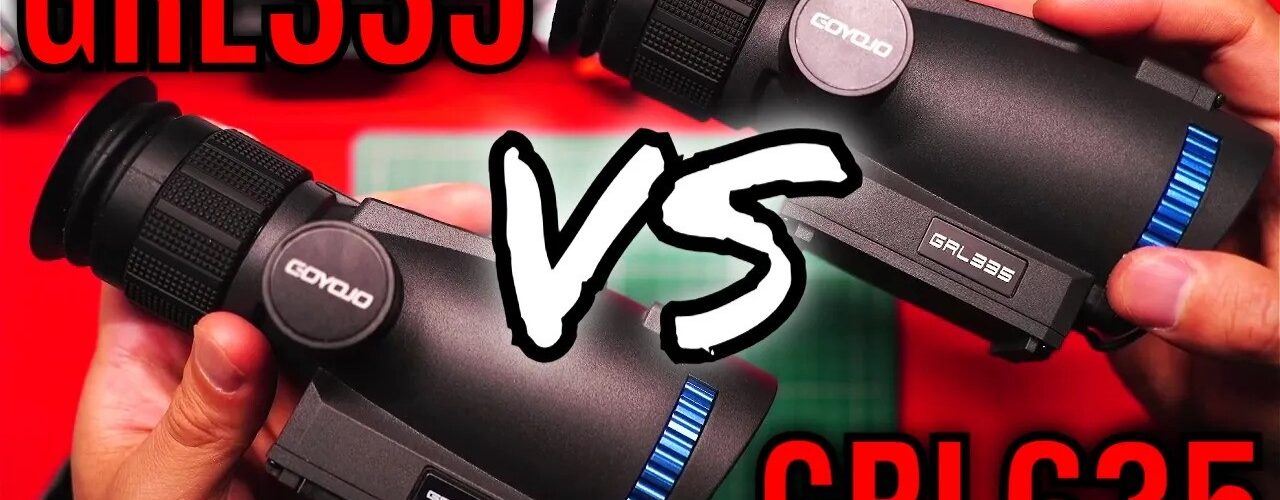
GOYOJO GRL335 vs GRL635: is upgrading from 384 × 288 to 640 × 512 thermal resolution actually worth the extra money?
I’ve tested both thermal monoculars, and although they look quite similar on paper, there are some important differences in image detail, field of view, thermal sensitivity and battery life.
The GRL335 has a 384 × 288 sensor with approximately 110,000 pixels, while the GRL635 steps up to 640 × 512 and approximately 328,000 pixels. That’s almost three times the thermal pixel count, along with a wider listed field of view and better rated thermal sensitivity.
But here’s the interesting part: GOYOJO lists the same maximum detection range of 2,647 metres for both models. So does the higher-resolution GRL635 actually offer a meaningful advantage in the field?
In this comparison:
- GRL335 vs GRL635 sensor resolution and image detail
- 384 × 288 vs 640 × 512 thermal imaging
- Thermal sensitivity: less than 25mK vs less than 20mK
- Field of view and long-range observation
- Side-by-side outdoor thermal footage at different magnifications
- Detection range and practical image clarity
- Battery life: approximately 6–8 hours vs 4 hours
- Refresh rate, digital zoom and picture-in-picture
- Video recording, Wi-Fi and app differences
- Which thermal monocular offers the best value?
My verdict: The GRL335 remains a compelling option if price and battery life are your priorities. But if you want more image detail for observing smaller targets at longer distances, the GRL635 is the more capable option.
Watch the outdoor comparison to see how the two sensors perform side by side.
Thanks for watching!
#GOYOJO #ThermalImaging #thermaloptics
00:00 – Introduction & Overview
00:46 – Sensor Resolution (384×288 vs 640×512)
01:30 – Thermal Sensitivity (NETD)
02:29 – Field of View (FOV)
03:22 – Battery Life & Power Consumption
04:01 – Refresh Rate & Detection Range
04:46 – Audio Recording & OpticCam App Support
05:56 – Side-by-Side Field Comparison
08:48 – Digital Zoom Comparison (8x, 12x, 16x)
11:42 – Night Observation & Target Tracking
12:40 – Final Verdict: Which One Should You Buy?